Aluminum Honeycomb Panels for Furniture & Cabinets

Qitianmei aluminum honeycomb panels can be configured for furniture and cabinet applications, including cabinet bodies, shelves, back panels, furniture components and project-specific cabinet door panels.

Panel thickness, Face Skin Thickness, Back Skin Thickness, component dimensions, surface finish, connection method and hardware requirements should be considered together for the actual application.

Qitianmei can supply full panels and can also discuss project-specific cabinet, furniture and prepared-component requirements. The final fabrication and supply scope is confirmed separately for each project.

View Aluminum Honeycomb Panels
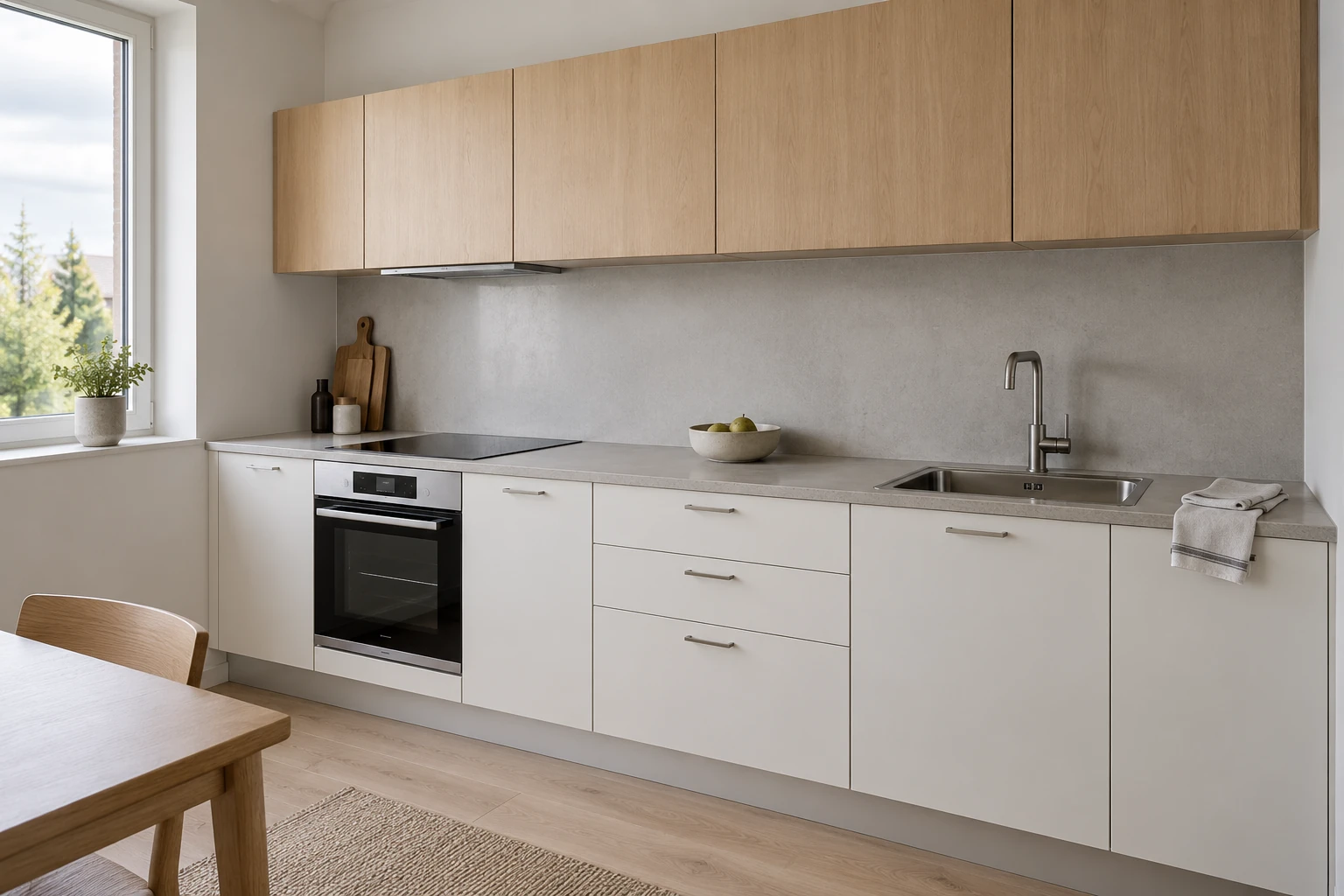
Application illustration of cabinetry with warm woodgrain faces, neutral storage panels and aligned joints

Where Aluminum Honeycomb Panels Fit in Furniture & Cabinetry

Cabinet Bodies

Aluminum honeycomb panels can be considered for cabinet body components such as side panels, top panels, bottom panels and other structural cabinet parts.

For cabinet body applications, common Overall Panel Thickness starting points include 12 mm, 15 mm and 18 mm.

These are common starting points for furniture and cabinet body applications, not the full Qitianmei Overall Panel Thickness range. The final thickness should be selected according to the cabinet design, component dimensions, connection method, hardware, span and use requirements.

View Specifications & Customization

Shelves and Furniture Components

Aluminum honeycomb panels can also be discussed for shelves and other furniture components.

The appropriate panel construction depends on the component size, support condition, connection method, hardware and intended use.

Where machining, reinforcement or hardware preparation is required, the project details should be reviewed before the supply scope is confirmed.

Cabinet Back Panels

Cabinet back panels do not need to follow one fixed thickness for every project.

9 mm is an optional thickness, but it is not Qitianmei’s standard cabinet back panel thickness.

18 mm back panels are also common, particularly when the cabinet back is kept at the same thickness as the side, top and bottom panels. This can simplify material preparation, cutting and processing.

Other thicknesses can also be discussed according to the cabinet design and project requirements.

Cabinet Doors and Door Panels

Qitianmei currently does not define one universal standard or common Overall Panel Thickness for cabinet door panels.

Door panel selection should be confirmed according to the door dimensions, hinge and hardware requirements, panel construction, Face Skin Thickness, Back Skin Thickness and actual production feasibility.

Cabinet Panel Specification Starting Points

Furniture and cabinet projects should be specified according to the actual component rather than by using one fixed panel combination.

Common Cabinet Body Overall Panel Thicknesses

Common starting points for cabinet body applications include:

12 mm / 15 mm / 18 mm

These values apply to common furniture and cabinet body applications. They do not represent the complete Qitianmei Overall Panel Thickness range.

For the full general specification range, see:

View Specifications & Customization

Face Skin Thickness

Common Face Skin choices for furniture and cabinet applications include:

0.6 mm / 0.8 mm / 1.0 mm

These are common application choices, not the complete Qitianmei Face Skin Thickness range.

Back Skin Thickness

Common Back Skin choices for furniture and cabinet applications include:

0.6 mm / 0.8 mm / 1.0 mm

These are common application choices, not the complete Qitianmei Back Skin Thickness range.

Face Skin and Back Skin should be specified separately and can use different thicknesses.

The final combination is confirmed according to the component dimensions, application, connection method, hardware and project requirements.

Cabinet Back Panel Thickness

Cabinet back panel thickness should be selected according to the complete cabinet design rather than treated as one universal standard.

9 mm as an Optional Thickness

9 mm can be discussed as a cabinet back panel option.

It should not be described as Qitianmei’s standard back panel thickness.

The final construction, including Overall Panel Thickness, Face Skin Thickness, Back Skin Thickness, connection method and any reinforcement requirement, is confirmed according to the project.

Why 18 mm Back Panels Are Also Common

18 mm cabinet back panels are also common.

One practical reason is that the back panel can use the same thickness as the cabinet side, top and bottom panels, helping simplify material preparation, cutting and processing.

This does not mean that every cabinet project should use an 18 mm back panel. Other thicknesses can be selected according to the cabinet design and project requirements.

Cabinet Door Panel Selection

Cabinet doors require project-specific selection because door size, hinge configuration, hardware and panel construction can affect the required specification.

Qitianmei currently does not define one universal standard or common cabinet door Overall Panel Thickness.

For a cabinet door project, the following should be reviewed together:

  • Door dimensions
  • Hinge type and hardware requirements
  • Overall Panel Thickness
  • Face Skin Thickness
  • Back Skin Thickness
  • Panel construction
  • Surface finish
  • Required machining or preparation

The final door-panel specification is confirmed according to the actual project and production feasibility.

How to Select a Furniture or Cabinet Panel

A furniture or cabinet panel should be selected around the actual component and its use.

Component and Dimensions

First identify where the panel will be used:

  • Cabinet body
  • Cabinet back
  • Shelf
  • Furniture component
  • Cabinet door or door panel
  • Other interior furniture application

Then confirm the required component dimensions.

Overall Panel Thickness

Select the Overall Panel Thickness according to the component design, dimensions, connection method, hardware, span and use requirements.

For cabinet body applications, 12 / 15 / 18 mm are common starting points, but they are not the complete available thickness range.

Face Skin and Back Skin

Face Skin Thickness and Back Skin Thickness should be specified separately.

For furniture and cabinet applications, 0.6 / 0.8 / 1.0 mm are common choices for each side.

The final Face / Back combination should be confirmed according to the component and project requirements.

Connection and Hardware Requirements

Where the panel will interact with hinges, drawer hardware, shelf supports, fasteners or other fittings, the relevant hardware and fixing locations should be considered before the panel construction and processing scope are finalized.

Surface Finish

The selected surface finish should match the furniture design, visible sides and project requirements.

Final color, texture and gloss should be confirmed against the approved physical sample.

Explore Surface Finishes

Surface Finishes for Furniture & Cabinet Applications

Furniture and cabinet projects can use different surface systems and visual effects according to the required design.

Finish systems can include:

  • Powder Coating
  • Water-Based Paint
  • PVC Decorative Film
  • PET Decorative Film
  • Wood-Grain Transfer

Appearance options can include:

  • Wood Grain
  • Solid Color
  • Stone Look
  • Fabric / Woven Texture
  • Brushed
  • Soft-Touch
  • Matte
  • Metallic Effect

Face and Back surfaces can use matching or different finishes depending on the project.

Final color, texture and gloss are confirmed against the approved physical sample.

Explore Surface Finishes

Full-Sheet Supply or Project-Specific Components

Qitianmei can discuss both full-panel supply and project-specific furniture or cabinet requirements.

Standard Full-Sheet Supply

Standard full-sheet supply is based on the confirmed panel specification.

It does not automatically include:

  • CNC machining
  • Drilling or openings
  • Furniture edge treatment
  • Reinforcement
  • Hardware preparation or inserts
  • Component assembly
  • Installation

These requirements should not be assumed to be included in the standard panel quotation.

View Specifications & Customization

Project-Specific Cabinet & Furniture Components

Project-specific requirements can be discussed, including items such as:

  • Cut-to-size requirements
  • CNC machining
  • Drilling or openings
  • Edge treatment
  • Reinforcement
  • Hardware preparation
  • Prepared cabinet or furniture components
  • Assembly requirements
  • Installation requirements

These are not standard services automatically included with every order.

Availability and supply scope are confirmed separately for each project.

Where project-specific processing is required, please provide as much of the following information as possible:

  • Component dimensions
  • Hardware type
  • Fixing locations
  • Drawings where available
  • Required machining or reinforcement

This information helps determine what can be included in the confirmed project scope.

Frequently Asked Furniture & Cabinet Panel Questions

What Overall Panel Thicknesses are commonly used for cabinet body panels?

For cabinet body applications, common starting points include:

12 mm / 15 mm / 18 mm

These are common furniture and cabinet body application thicknesses, not the complete Qitianmei Overall Panel Thickness range.

The final thickness should be selected according to the cabinet design, component dimensions, connection method, hardware, span and use requirements.

View the Full Specification Range

Is 9 mm the standard cabinet back panel thickness?

No.

9 mm is an optional cabinet back panel thickness, but it is not Qitianmei’s standard cabinet back panel.

The appropriate back panel thickness depends on the cabinet design and project requirements.

Can 18 mm be used for cabinet back panels?

Yes.

18 mm cabinet back panels are also common.

Using the same 18 mm thickness for the back, side, top and bottom panels can help simplify material preparation, cutting and processing.

Other thicknesses can also be discussed according to the project.

What Face Skin and Back Skin thicknesses are common for furniture and cabinet panels?

Common furniture and cabinet application choices include:

Face Skin: 0.6 / 0.8 / 1.0 mm

Back Skin: 0.6 / 0.8 / 1.0 mm

These are common choices for this application, not the complete Qitianmei skin thickness range.

Face Skin and Back Skin are selected separately, and the final combination is confirmed according to the project.

What thickness should be used for cabinet doors?

Qitianmei currently does not define one universal standard or common cabinet door Overall Panel Thickness.

The specification should be selected according to the door dimensions, hinge and hardware requirements, Face Skin Thickness, Back Skin Thickness, panel construction and actual production feasibility.

Are CNC machining, drilling and edge treatment included with full-sheet supply?

No. They are not automatically included in standard full-sheet supply.

Project-specific CNC machining, drilling, openings, edge treatment and related processing can be discussed.

Availability and supply scope are confirmed separately for each project.

Can Qitianmei supply cabinet or furniture components instead of only full sheets?

Yes.

Qitianmei can supply full panels and can also discuss project-specific cabinet, furniture or prepared-component requirements.

Cut-to-size work, CNC machining, drilling, edge treatment, reinforcement, hardware preparation, prepared components, assembly or installation requirements are reviewed separately according to the project.

Availability and the final supply scope are confirmed before the order.
View All FAQs

Prepare Your Furniture or Cabinet Inquiry

To help us review your requirement, please provide as much of the following information as possible:

Application / Component → Dimensions → Overall Panel Thickness → Face Skin Thickness → Back Skin Thickness → Honeycomb Core → Surface Finish → Quantity → Hardware or Processing Requirements → Delivery Destination

If drawings, hardware details or fixing locations are available, they can also be provided for project review.

If some specifications are not yet decided, send the information you already have and the remaining details can be discussed.